
What I Tell Every Patient Diagnosed With Endometriosis
The diagnosis of endometriosis hits hard for many women. Especially when you’re trying to get pregnant and someone tells you that this condition—the one causing those agonising periods you’ve been managing for years—is also affecting your fertility.
I want to be honest with you about what endometriosis means for conception. Not to give false hope, but also not to catastrophise unnecessarily. Because the reality is more nuanced than “endometriosis = infertility.”
What Endometriosis Actually Does
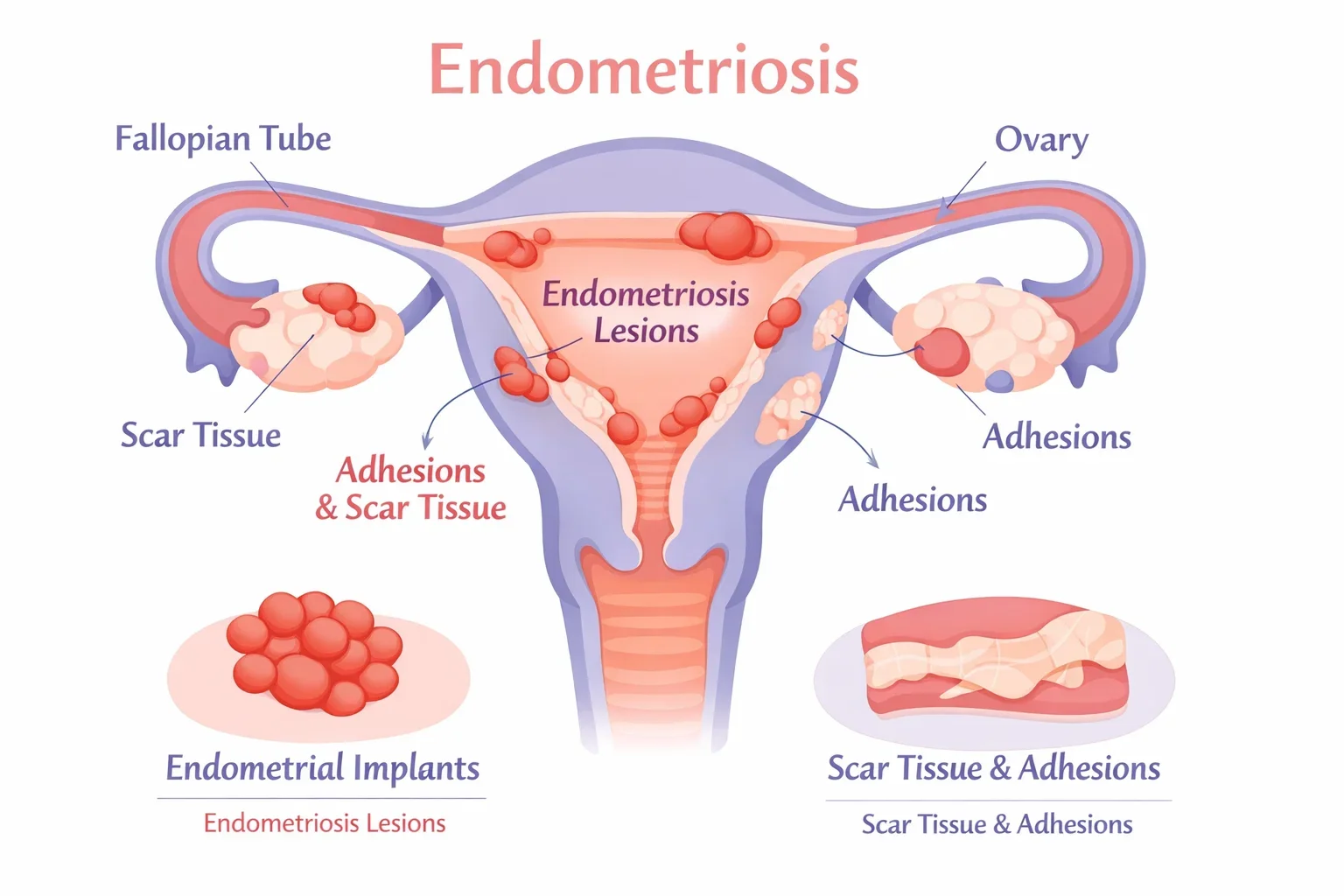
Endometriosis is where tissue similar to the uterine lining grows outside the uterus — on the ovaries, tubes, bowel, bladder, peritoneum. Every month, this tissue responds to your hormonal cycle — it swells, bleeds, but has nowhere to drain. This causes inflammation, pain, and over time, scar tissue.
How it affects fertility depends significantly on the stage:
- Mild (Stage 1–2): May not significantly impair fertility. Many women with mild endometriosis conceive naturally.
- Moderate to Severe (Stage 3–4): Adhesions can block tubes, displace ovaries, or distort the pelvic anatomy. Ovarian endometriomas (chocolate cysts) can reduce egg reserve.
The inflammation and the hostile pelvic environment also affect sperm function, egg quality, and embryo implantation — even without visible structural damage.
Your Treatment Options
Trying Naturally With Monitoring
For young women with mild endometriosis and no other fertility issues, attempting natural conception with cycle monitoring is a reasonable first step. Time is still a factor though — I wouldn’t wait more than 6 months before moving to treatment.
Laparoscopic Surgery
This is the gold standard for moderate-severe endometriosis. Laparoscopic excision of endometriotic deposits improves natural conception rates in Stage 1–3 endometriosis. It’s also the only way to definitively diagnose and stage the disease.
IUI Post-Surgery
For younger women after surgical treatment of mild-moderate endometriosis, IUI with ovulation induction can be an effective next step.
IVF
For moderate-severe endometriosis, older patients, or those who haven’t conceived after surgery and IUI — IVF is the most effective option. It completely bypasses the pelvic environment where endometriosis does its damage.
The Ovarian Reserve Question — This Is Important
If you have endometriomas on your ovaries, I strongly recommend getting your AMH level checked before any decision about surgery. Operating on endometriomas can reduce ovarian reserve, so sometimes we need to weigh the benefit of surgery against the risk to egg supply. This is a decision I never rush.
You Don’t Have to Figure This Out Alone
At Punit Fertility in Kandivali, Mumbai, I see endometriosis patients regularly and build a personalised plan based on stage, age, ovarian reserve, and your priorities. Many of my endometriosis patients have gone on to have successful pregnancies.
👉 Book an endometriosis and fertility consultation at Punit Fertility