
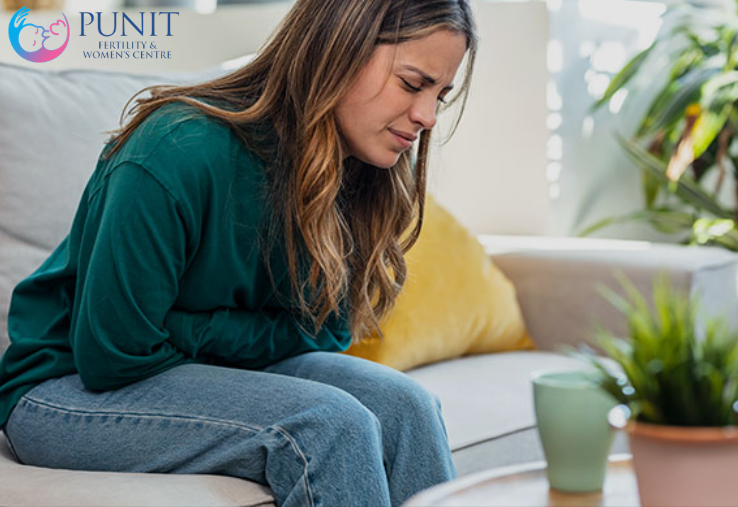
How Much Pain Is Too Much?
I’ve lost count of how many women have sat in my clinic and said some version of: “My periods have always been painful, I thought it was normal.” Or: “My mum said heavy periods run in our family, so I just deal with it.”
Here’s the problem with normalising severe menstrual symptoms: it delays diagnosis of treatable conditions — sometimes for years. Endometriosis, adenomyosis, fibroids, PCOS — these are not lifestyle issues to “just manage.” They’re medical conditions that respond to treatment.
Let me help you understand the difference between normal and not.
What’s Actually Normal
- Mild to moderate cramping for 1–2 days at the start of your period
- Manageable with a paracetamol or ibuprofen
- Flow that requires changing a pad/tampon every 3–4 hours at peak
- Cycle length between 21–35 days
- Duration of 2–7 days
What’s Not Normal and Deserves Investigation
Period Pain That Disrupts Your Life
If you’re missing work, school, or social commitments because of period pain — that’s not normal. If you need stronger painkillers and they’re not fully working — that’s not normal. Severe dysmenorrhoea is one of the most classic symptoms of endometriosis, which can silently damage fertility over years before it’s ever diagnosed.
Soaking Through Protection Every 1–2 Hours
Heavy menstrual bleeding — medically defined as losing more than 80ml per cycle — is not something to just live with. It causes iron deficiency anaemia, affects quality of life, and is very often caused by something specific and treatable: fibroids, polyps, adenomyosis, or a hormonal imbalance.
Cycles Shorter Than 21 or Longer Than 35 Days — Consistently
Occasional variation is normal. Consistent irregularity is not. Irregular cycles usually mean irregular ovulation, which matters both for fertility and hormonal health.
Bleeding Between Periods or After Sex
Intermenstrual or post-coital bleeding always needs investigation — it can be from polyps, cervical erosion, infection, or in rare cases something more serious.
Periods That Were Normal and Then Changed
A sudden change in your cycle pattern — becoming much heavier, more painful, or more irregular — is a red flag worth investigating.
Pain During Intercourse
Deep pelvic pain during sex (dyspareunia) — particularly in specific positions — is a symptom I take very seriously. It can indicate endometriosis, ovarian cysts, or pelvic adhesions. It should never be normalised or dismissed.
What We Can Do About It
Most menstrual disorders have effective treatments — medical, hormonal, or surgical. Hysteroscopy for polyps. Laparoscopy for endometriosis. Hormonal management for adenomyosis and PCOS. Heavy bleeding treated medically or surgically depending on cause and severity.
At Punit Fertility & Women’s Center, Kandivali Mumbai, menstrual disorders are treated with the full range of options available under one roof.