
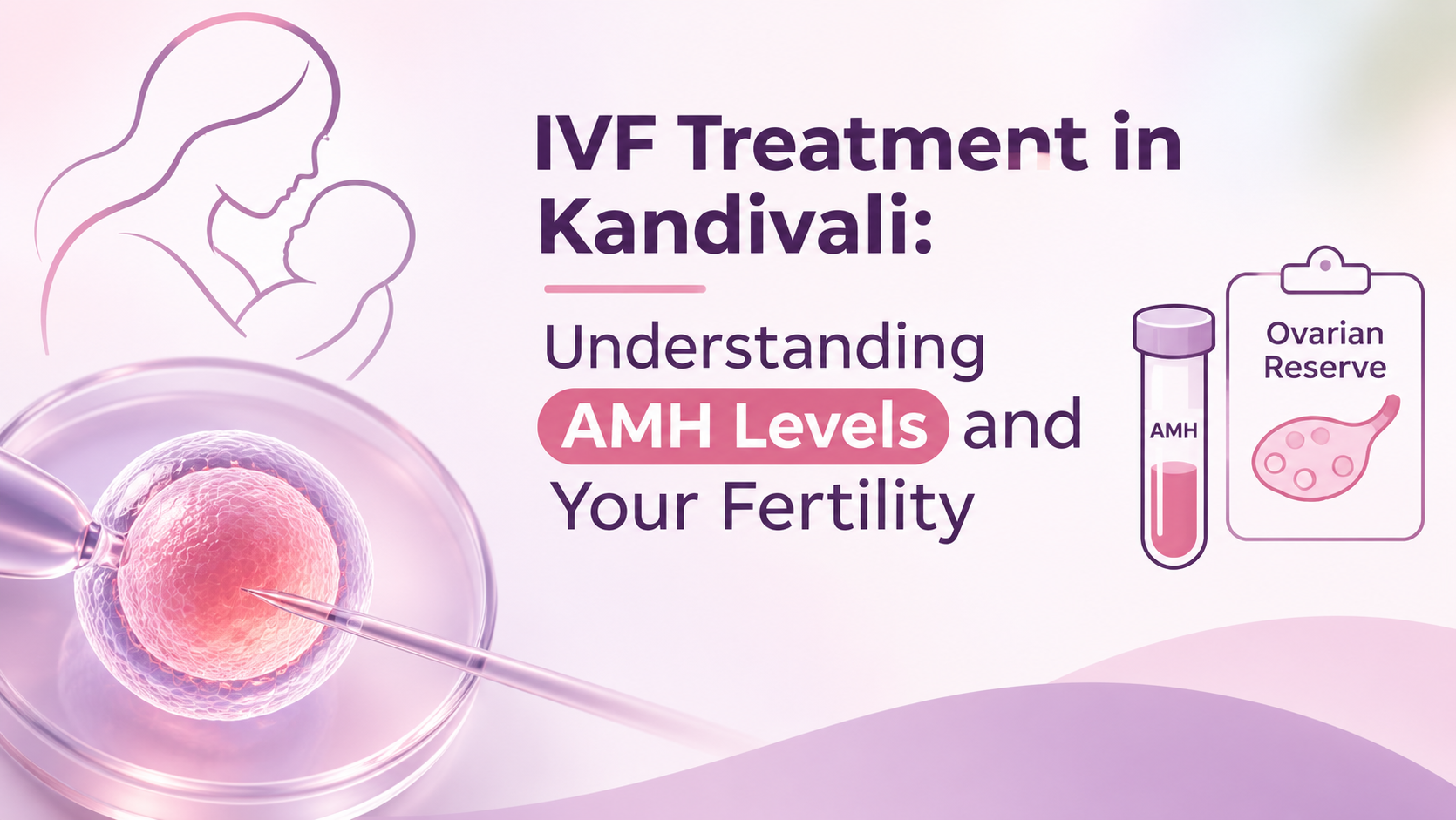
AMH (anti-Müllerian hormone) is a blood test that estimates how many eggs a woman has left, known as her ovarian reserve. A low AMH means fewer eggs, not that pregnancy is impossible, and it says little about egg quality. AMH is most useful for planning fertility treatment such as IVF and egg freezing, and should always be read alongside age and an ultrasound follicle count.
“My AMH is 0.8. Does that mean I can’t get pregnant?”
We see this worry almost every week in Kandivali, often from women who were told to “just get an AMH test done” and then left alone with a number and Google. Let’s put that number in context.
What Is AMH?
Anti-Müllerian hormone is made by the small follicles in the ovaries, each of which contains an immature egg. The more follicles you have, the higher your AMH tends to be. So AMH gives a rough picture of your remaining egg supply.
Unlike many hormone tests, AMH can be checked on any day of the menstrual cycle.
What Is a Normal AMH Level?
AMH naturally falls with age, so “normal” depends on how old you are. Labs report it in ng/mL, and as a very rough guide:
- Above about 3.0: high, which can be seen in PCOS
- About 1.0 to 3.0: generally considered a reasonable reserve
- Below about 1.0: low reserve
- Below about 0.5: very low reserve
Ranges vary between labs and should be read against your age. A level that’s low for a 28-year-old may be expected at 40.
What AMH Can and Can’t Tell You
AMH can tell you:
- Roughly how many eggs remain compared with others your age
- How your ovaries might respond to IVF or egg-freezing medicines
- Whether you might have PCOS (when combined with other findings)
AMH can’t tell you:
- Whether you can get pregnant naturally this month
- The quality of your eggs, which depends mainly on age
- Exactly when you’ll reach menopause
Studies have found that among women trying to conceive naturally, a low AMH doesn’t strongly predict lower pregnancy chances in the short term. It’s a planning tool, not a verdict.
Low AMH: What Does It Mean for You?
If your AMH is low:
- Don’t panic. Women with low AMH conceive naturally all the time, because it only takes one good egg each month.
- Don’t wait too long. If you want children, it’s sensible to start trying sooner, or see a fertility specialist after six months of trying rather than a year if you’re over 35. Our guide to signs it’s time to see a fertility specialist can help.
- Consider your options. If pregnancy is some years away, egg freezing may be worth discussing. See egg freezing in Mumbai.
- In IVF, low AMH means fewer eggs may be collected, and medicine doses are adjusted accordingly. A specialist offering IVF Treatment in Kandivali can help you understand your options based on your ovarian reserve and fertility goals.
High AMH and PCOS
A high AMH often goes with polycystic ovary syndrome, where many small follicles are present. It’s not “more fertile” in the usual sense: PCOS can cause irregular ovulation. In IVF, high AMH means extra care to avoid over-stimulation. We cover this in PCOS and fertility.
Can You Increase Your AMH?
There’s no proven way to increase your number of eggs. Supplements marketed to “raise AMH” have weak evidence. What you can do is protect your general fertility: stay at a healthy weight, don’t smoke, limit alcohol, manage thyroid and other conditions, and don’t delay seeking help.
Frequently Asked Questions
Can I get pregnant with low AMH?
Yes. Many women with low AMH conceive naturally or with treatment. Age and egg quality matter more for natural pregnancy.
When should AMH be tested?
Any day of the cycle. It’s often tested when planning IVF or egg freezing, or when evaluating fertility.
Does AMH change month to month?
It’s fairly stable but can vary somewhat between tests and labs. Hormonal contraceptives can temporarily lower it.
Is AMH enough to assess fertility?
No. A full assessment includes age, cycle history, ultrasound, other hormone tests, checks of the fallopian tubes and the male partner’s semen analysis.
What AMH is too low for IVF?
There’s no single cut-off. Very low AMH means fewer eggs, but IVF may still be possible. Your specialist will discuss realistic chances.
Conclusion
A low AMH result does not mean you cannot become a mother. It simply provides information about your ovarian reserve and helps guide fertility planning. If you are considering IVF Treatment in Kandivali, an individual fertility assessment can help you understand the available options and make informed decisions.
Got an AMH report and not sure what it means for you? Book a consultation with Dr Miral Patel at Punit Fertility & Women’s Center, Kandivali. As an IVF center in Kandivali, the clinic can help you understand your reports and discuss suitable fertility options.